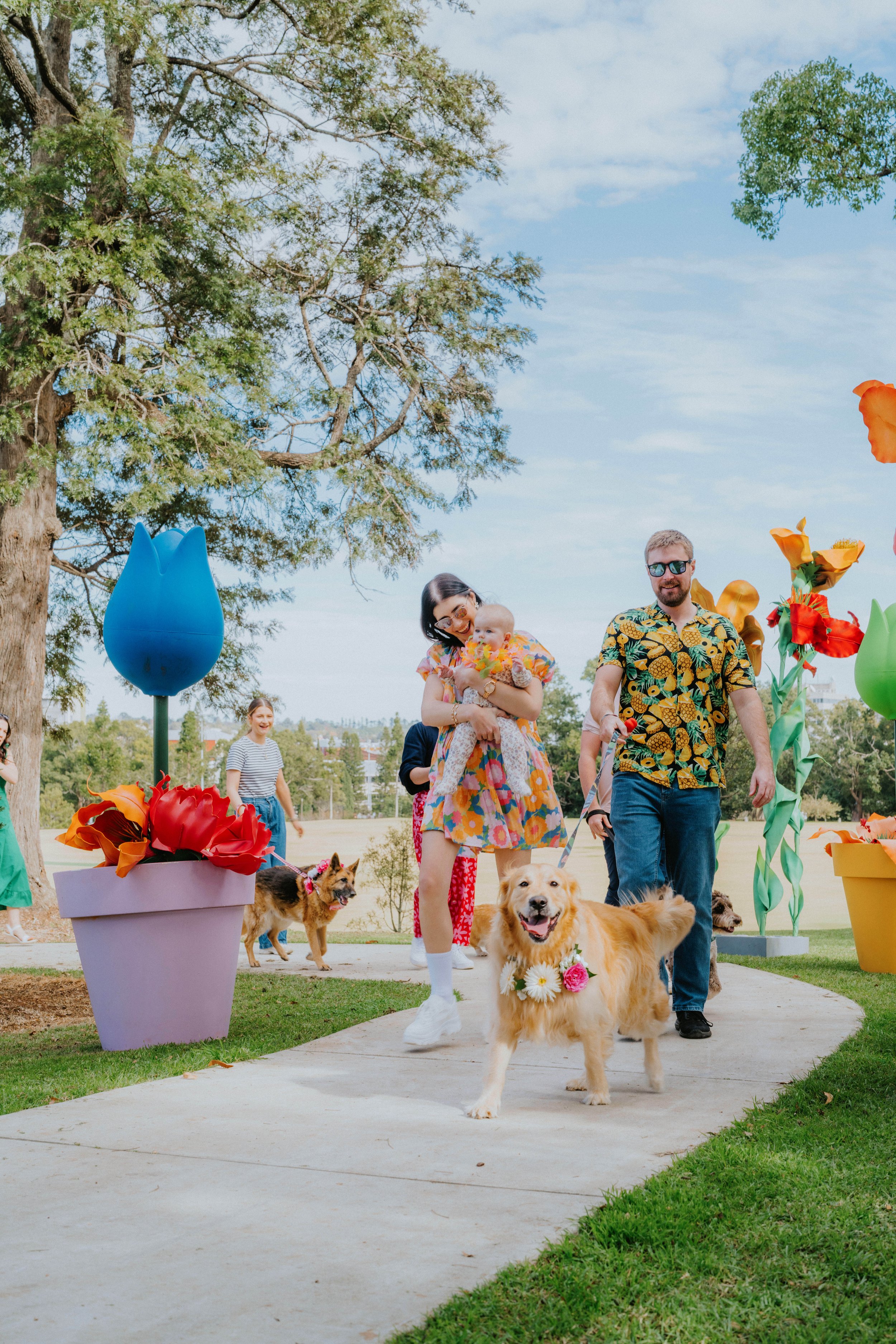
A Day in the Life: Dr Liam Dunn
Editor Sam Kirby spent a morning with St Vincent's obstetrician Dr Liam Dunn - and found himself, unexpectedly, in theatre for a caesarean section. (Heads up, contains Medical Images).
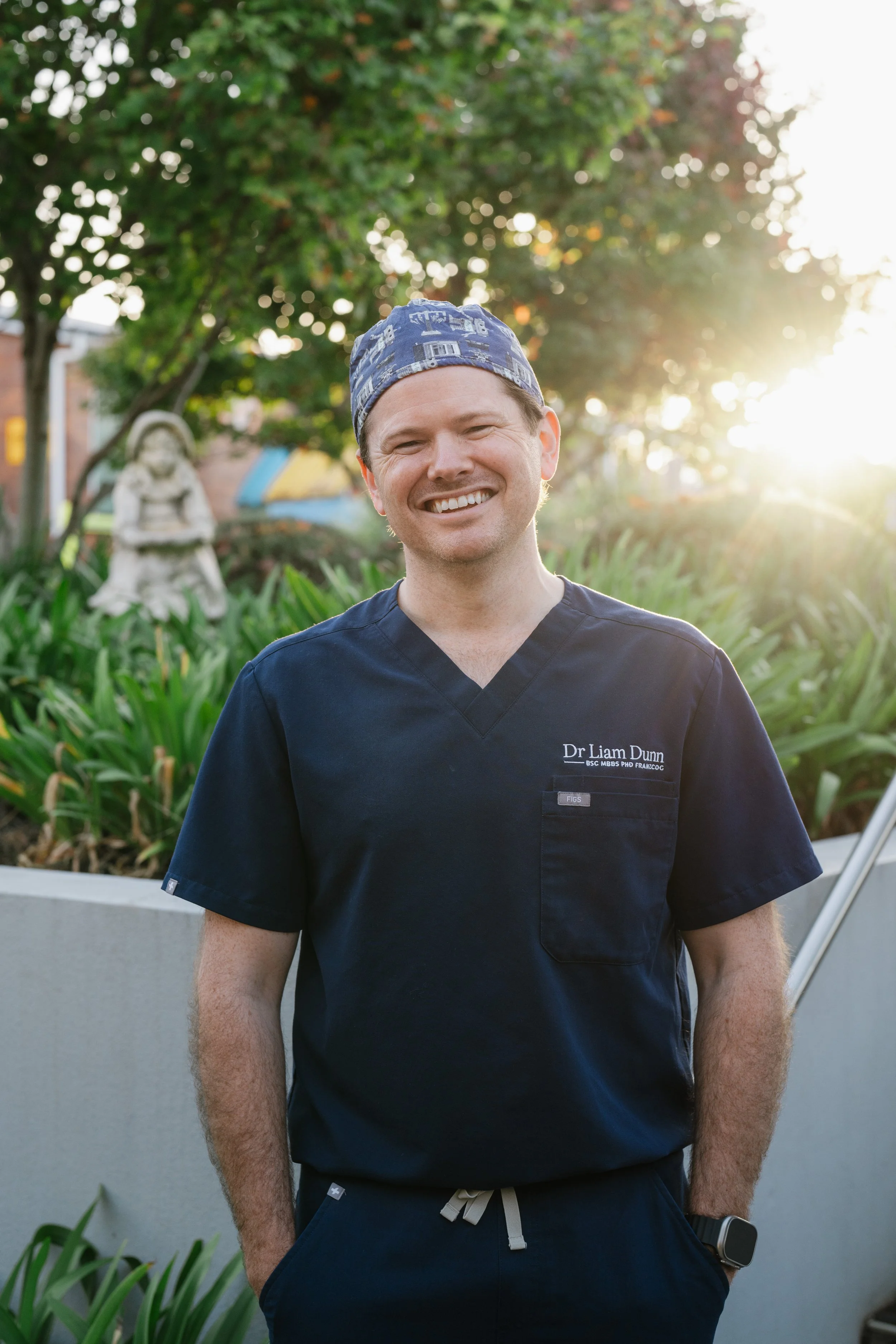
Written by Sam Kirby.
Photography: Helios Agency
By the time we arrived at St Vincent's Private Maternity Hospital, Dr Liam Dunn had already been in the birth suite for an hour. One family had welcomed their second baby before sunrise. A first-time mother was in labour. Two planned caesarean sections were on the morning's schedule - both couples about to meet their firstborn.
And somewhere in the middle of all of it, Dr Dunn moved with the quiet calm that comes from years of experience and of caring for hundreds of local families. It would be easy, watching him, to mistake that for routine. It isn't, and it never loses its wonder, and he would be the first to say so.
"There's an energy to these early mornings that's hard to describe," he says. "A kind of focused electricity. You can walk in with a perfectly structured morning, and by 7 a.m., it looks completely different. In obstetrics, that's not the exception - that's the job."
Dr Dunn himself was born at St Vincent's - he attended Mater Dei Primary School and then Downlands - returning to Toowoomba in 2023, he and his wife now raising their own children in his hometown community. When, last year, they welcomed their fourth child, he himself was born in Birth Suite 3 at St Vincent’s - the same birth suite where, this morning, a woman was in labour. It's a privilege that he doesn't take lightly.
For us, the call had come thirty-six hours before. Would we be willing to scrub up and go into the theatre? (Another for the never-did-we-ever-imagine list!)
In full scrubs, walking the staff corridors and prep rooms the public never sees, it started to feel real. With no children of our own and absolutely no idea what we were walking into, the nerves were building. The couple waiting, it turned out, were calm and expectant — they had journeyed with Dr Dunn throughout the pregnancy, fully prepared for exactly what to expect and when. We hadn't quite had that same briefing.
A few preemptive Lamaze breathing remarks from me in the corridor beforehand, a gentle reminder from Dr Dunn that "it’s not that kind of birth", my reassurance that actually “that was for me", then an unspoken shift – reminding us the doors we were about to enter carried a weight and a reverence altogether of their own. This was hallowed ground.
The family would join us soon.
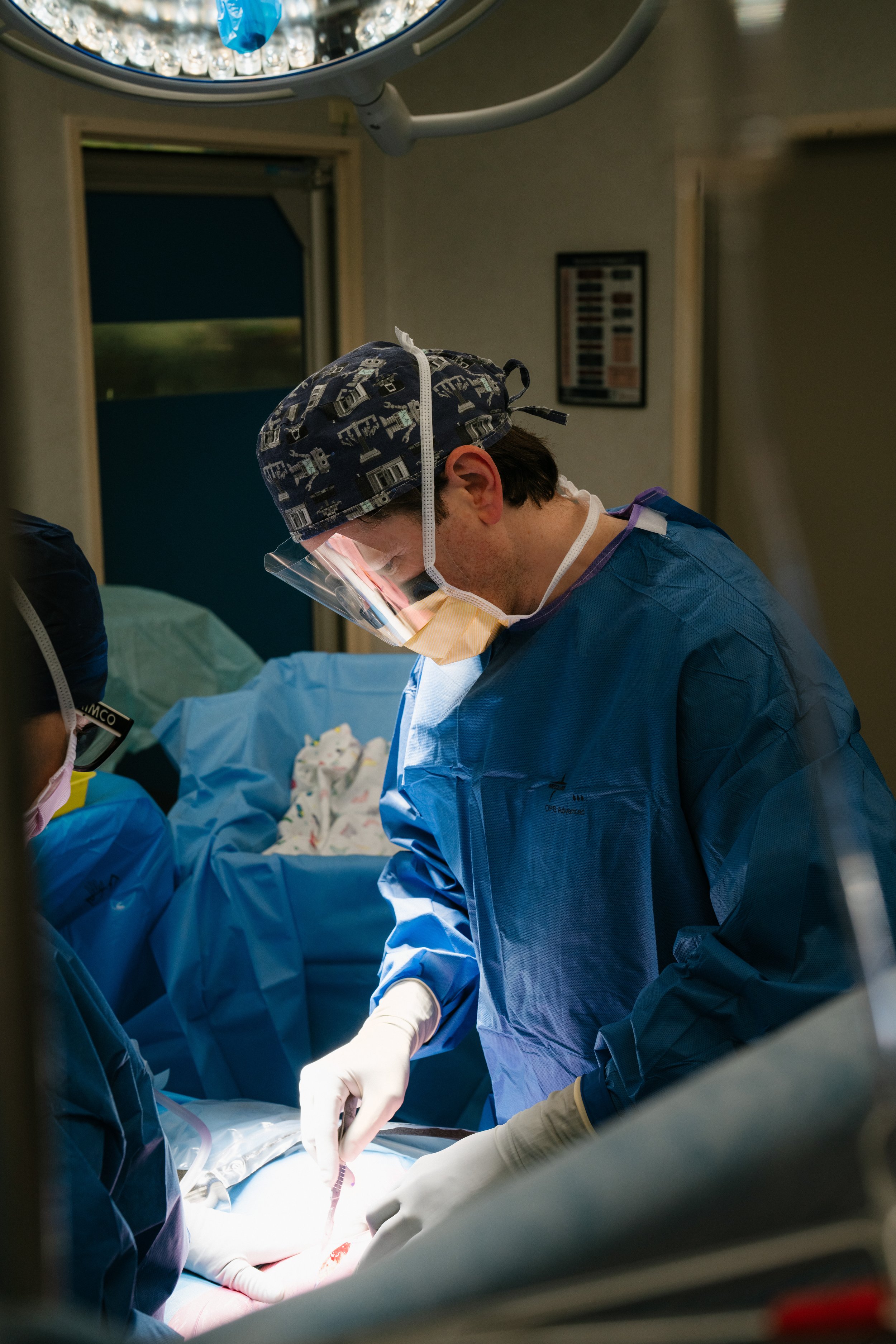
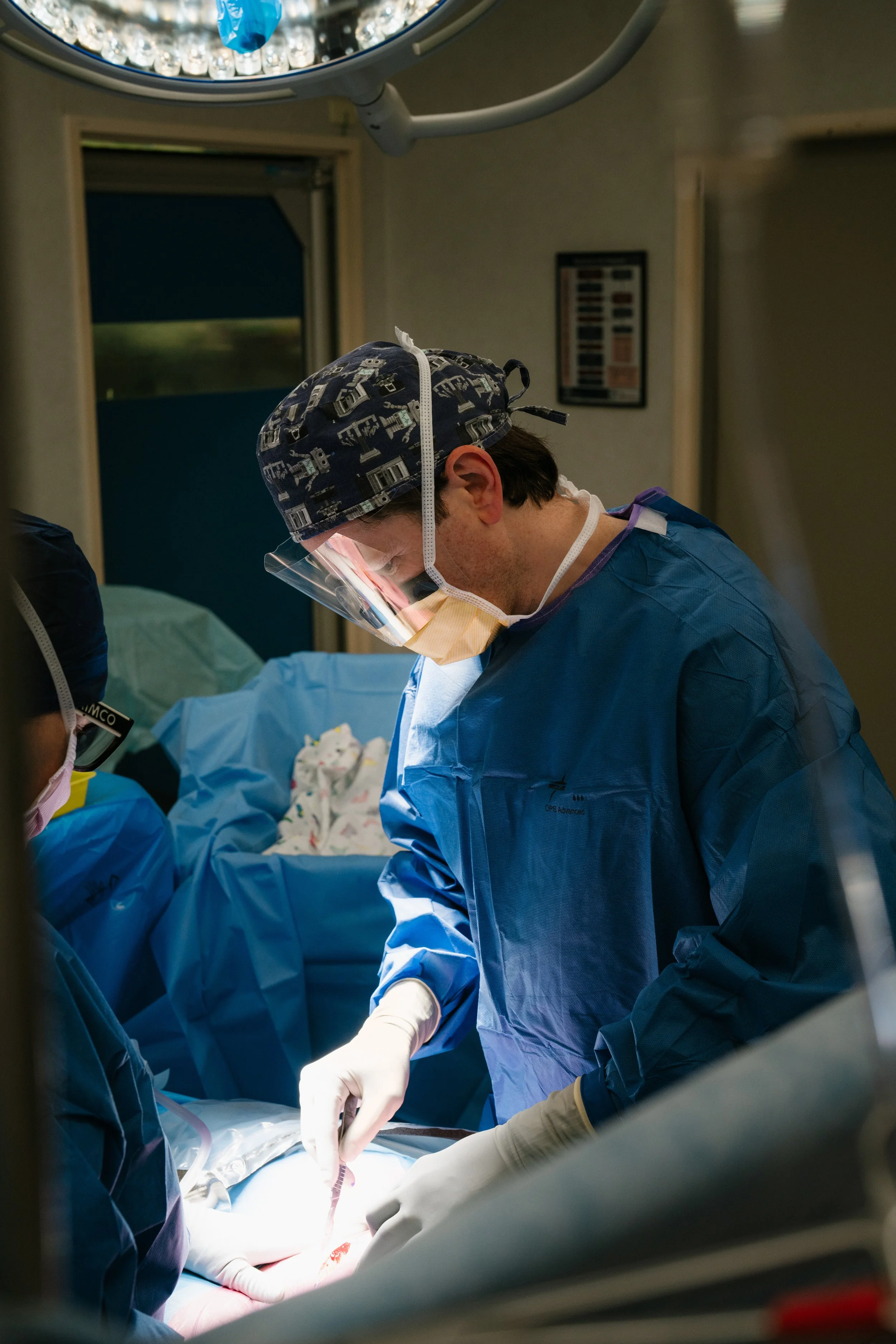
What we weren't prepared for was the speed. The preparation is careful and deliberate - the anaesthesia, the setup. But the procedure itself? Under eight minutes.
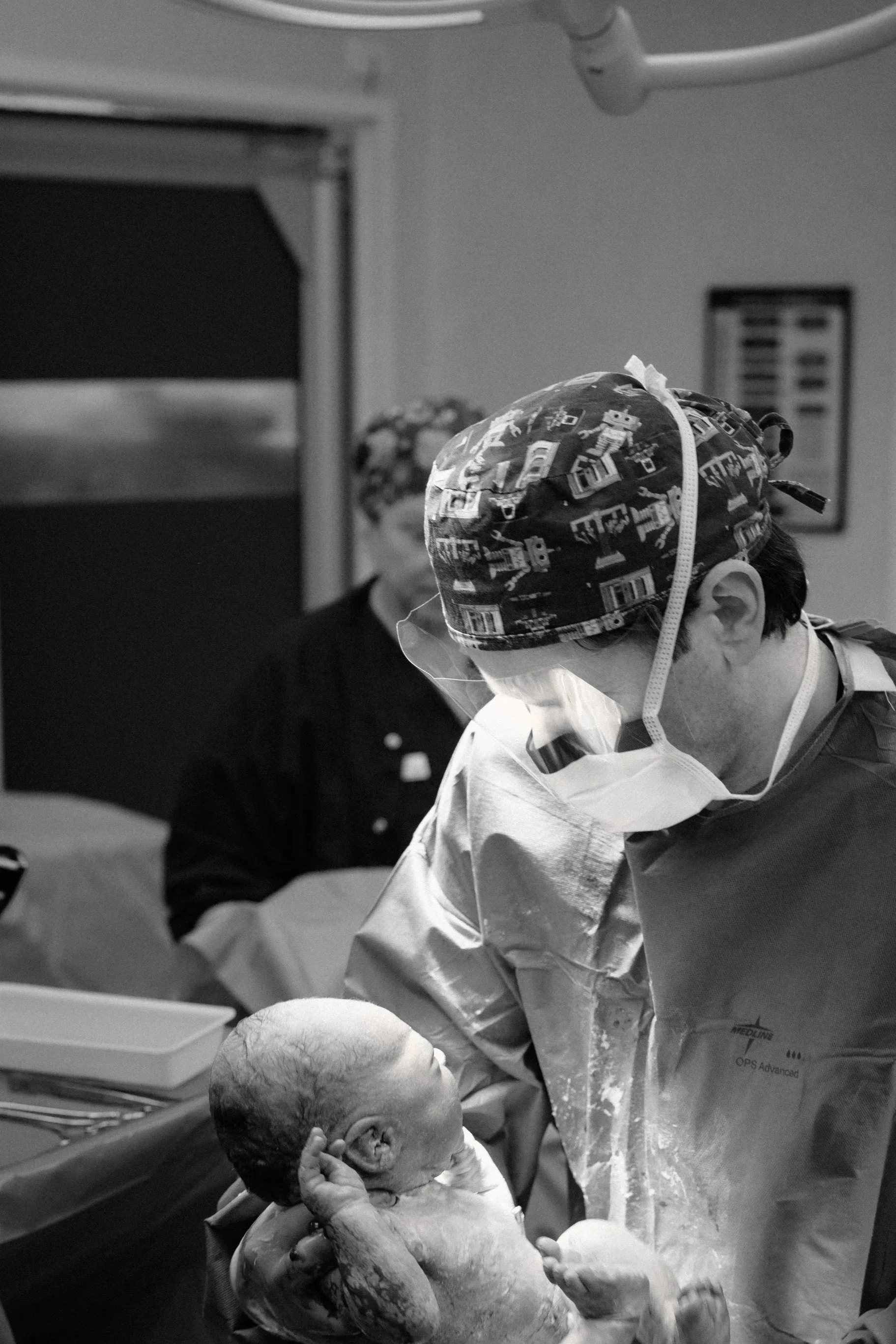
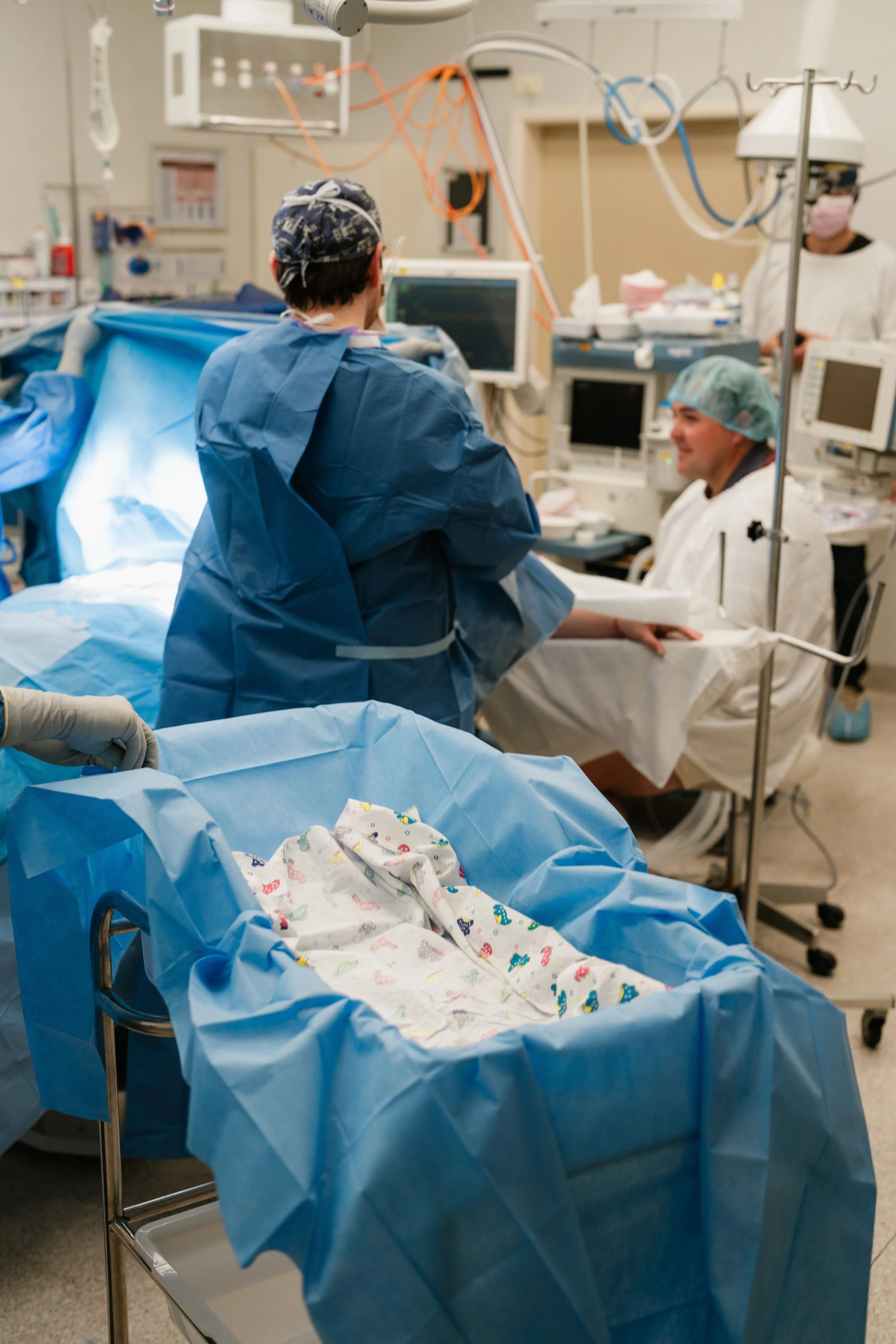
At one point, there were thirteen people in that theatre, not including the two of us. Each one with a specific role, moving with a precision that was extraordinary to witness. The energy was calm but charged - the electricity of a room full of people who know exactly what they're doing, gathered around something that matters enormously. The family was at the centre of it all, and Dr Dunn, quiet and focused in a way that felt different to how he'd been in the corridor twenty minutes earlier.
Music drifted through the theatre and the lights were lowered; a sense of calm and anticipation that felt less like a surgical procedure and more like what it was: a family about to meet their baby.
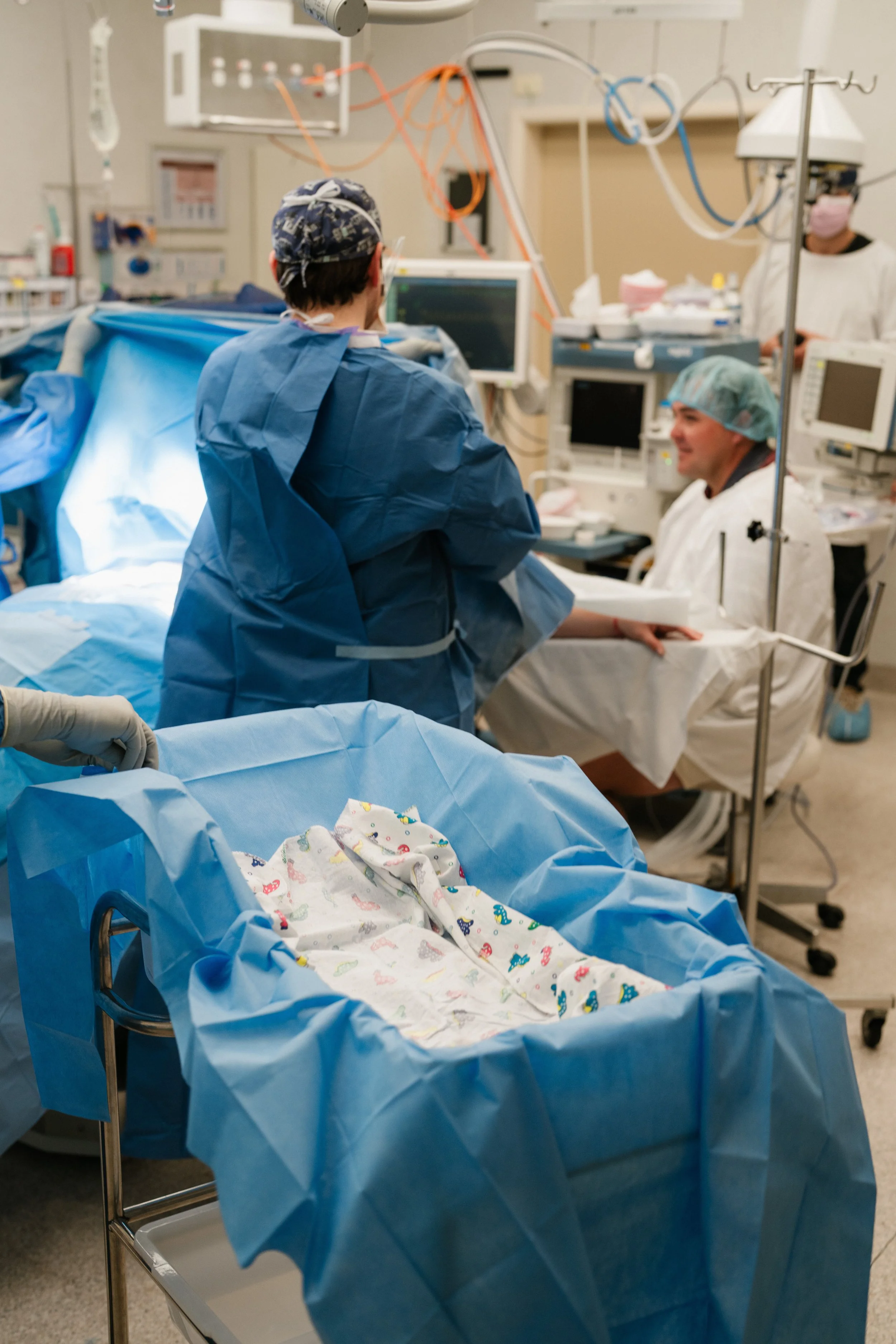
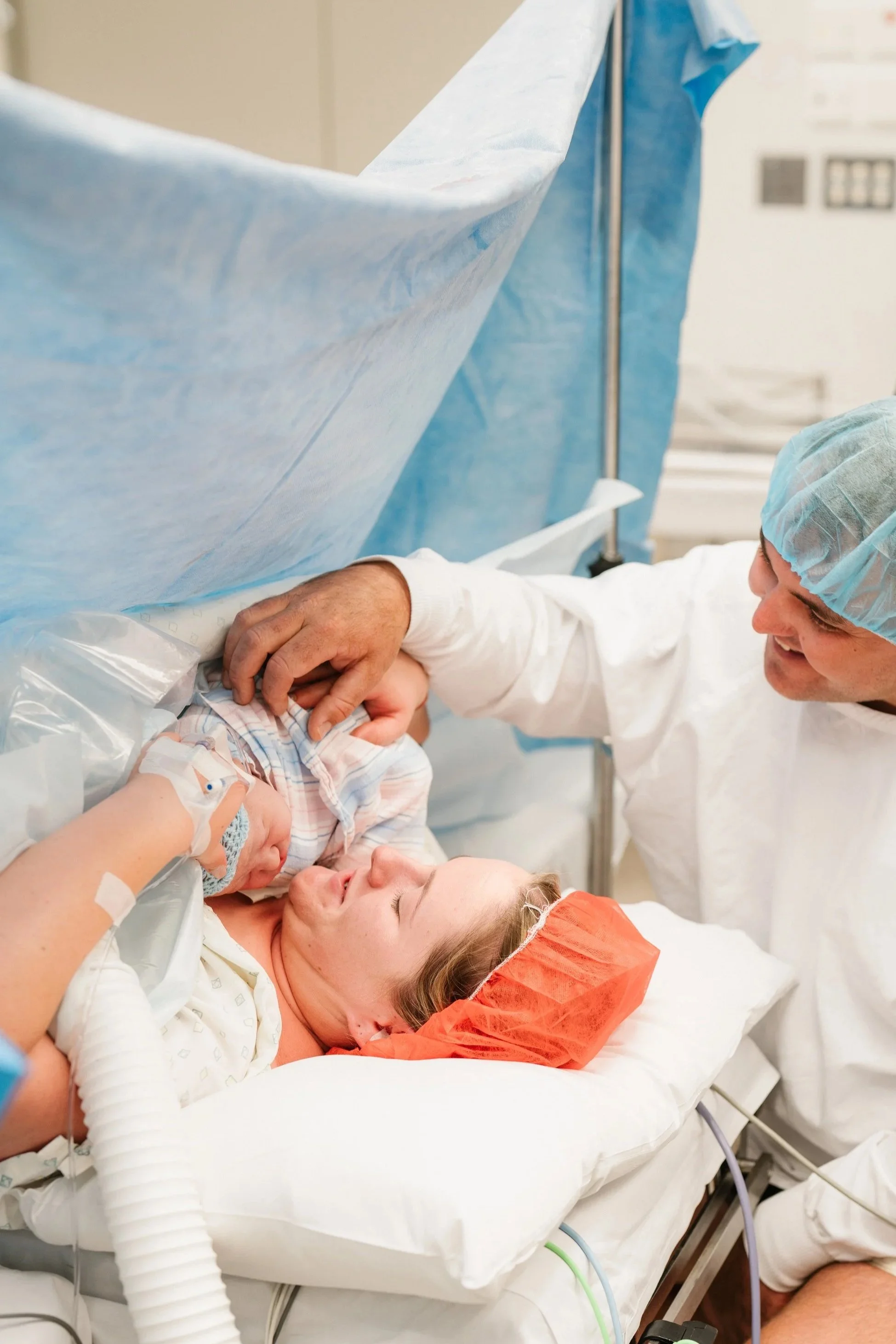
There is a curtain in that theatre. The parents are on one side - awake, talking, waiting. The surgical team are on the other. At one point, I found myself ducking around it to check on the mum, before turning back to the other side of that curtain — to a scene that most people never witness, and one I will never forget. Two entirely different realities, separated by a piece of fabric. It is, in the most literal sense, the miracle of modern medicine.
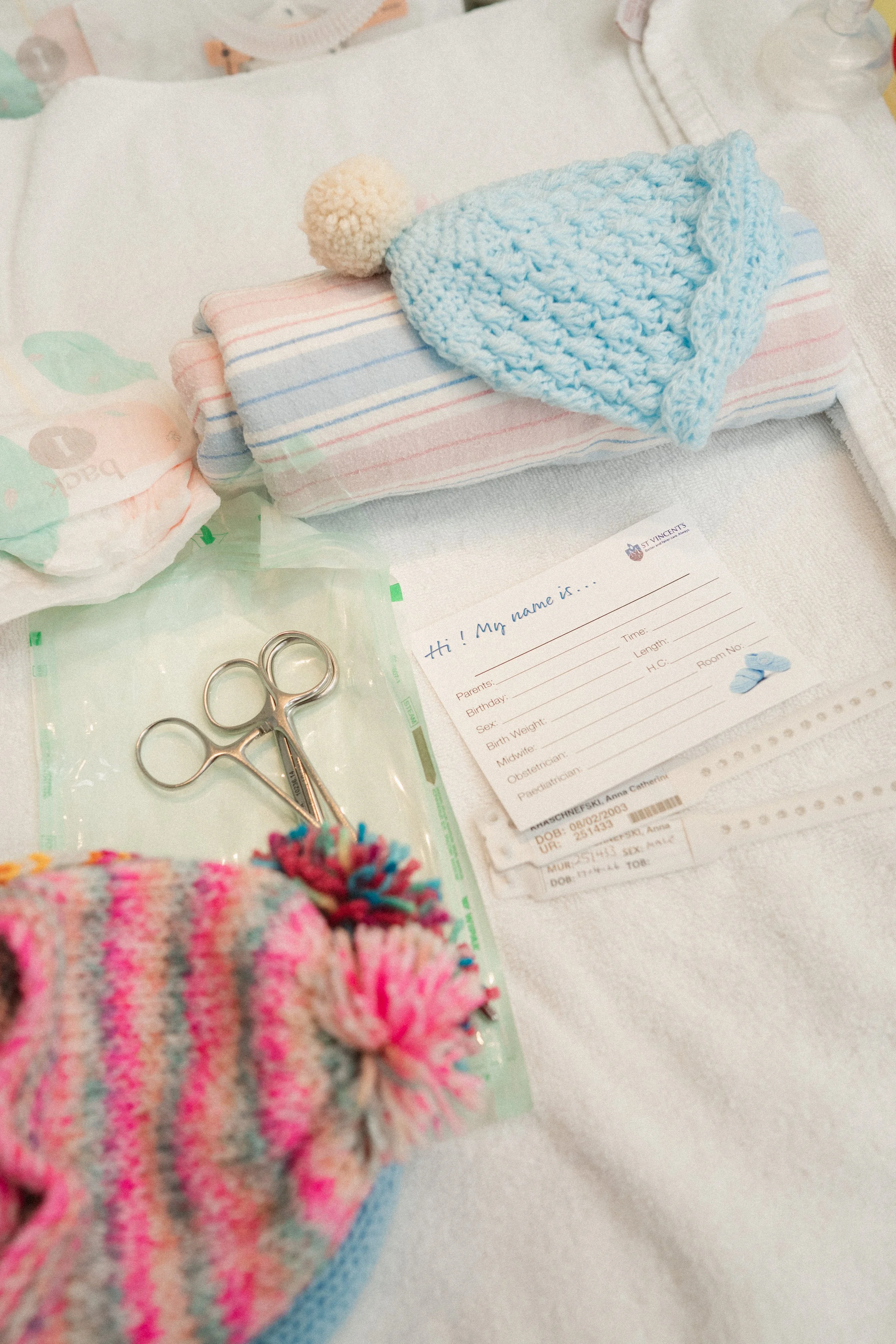
At some point in those eight minutes, the mood shifted — a quiet gathering of intent — and then a little boy arrived into the world, and the room just changed. The couple, beaming. The team, all smiles. The birth chime rang out through the corridors of the hospital. "I've been in that room more times than I can count," says Dr Dunn, "and my heart still does something when it happens. Every single time. It's an incredible privilege. It never gets old - honestly, never."
Walking back out into the ordinary world an hour later, it was hard not to feel the weight of what we'd just seen. The small things that fill an ordinary day felt, briefly, very small indeed.
The birth chime rang four times that morning. Four new lives. Four families changed forever.
What strikes you, stepping back into the corridor, is how quickly the morning continues. Consulting rooms sit close to the ward and theatres by design, and within the hour, Dr Dunn is sitting across from another woman – this one is at the start of her pregnancy journey, twelve weeks pregnant and full of questions. "That proximity matters," he says. "You're not just a face at a birth and then gone. You're present across the whole journey."
Most people hear obstetrician and picture births. The reality is broader. Fertility and subfertility, preconception counselling, endometriosis, adenomyosis, heavy periods, pelvic floor concerns — and robotic surgery, a major part of Dr Dunn’s practice, bringing minimally invasive procedures for conditions like endometriosis, fibroids and hysterectomy to Toowoomba without the need to travel to Brisbane. "That is something I feel genuinely strongly about," he says.
And then there is the continuity - the particular thing that regional practice offers.
"You might care for someone through a pregnancy," he says, "and then years later they come back with something completely different. You become part of families' lives across very different chapters." He pauses. "That kind of trust - you feel the weight of it. And the honour of it. Every day."
St Vincent's has been part of that story for generations. Families who had their babies here decades ago are now watching their own children do the same, in the same corridors, with the same birth chime marking every arrival. Dr Dunn is, in his own way, woven into all of it - born here, educated here, raising his family here. "I came home to Toowoomba for a reason," he says, "and this hospital is a big part of it."
After a morning like this one, that much is easy to believe.
As we made our way out, it occurred to me that this hadn't technically been my first caesarean section. Having been born by one myself, I felt it only natural to now boast of my vast experience.
Dr Dunn smiled.
"There's a saying in medicine - see one, do one, teach one?" he (very much) jokingly questioned. "We have another baby due in an hour if you're free?"
Best to leave that to the professionals.
Do you have a campaign we should know about? Please let us know!