Meet the Locals. . . The Good Dozen
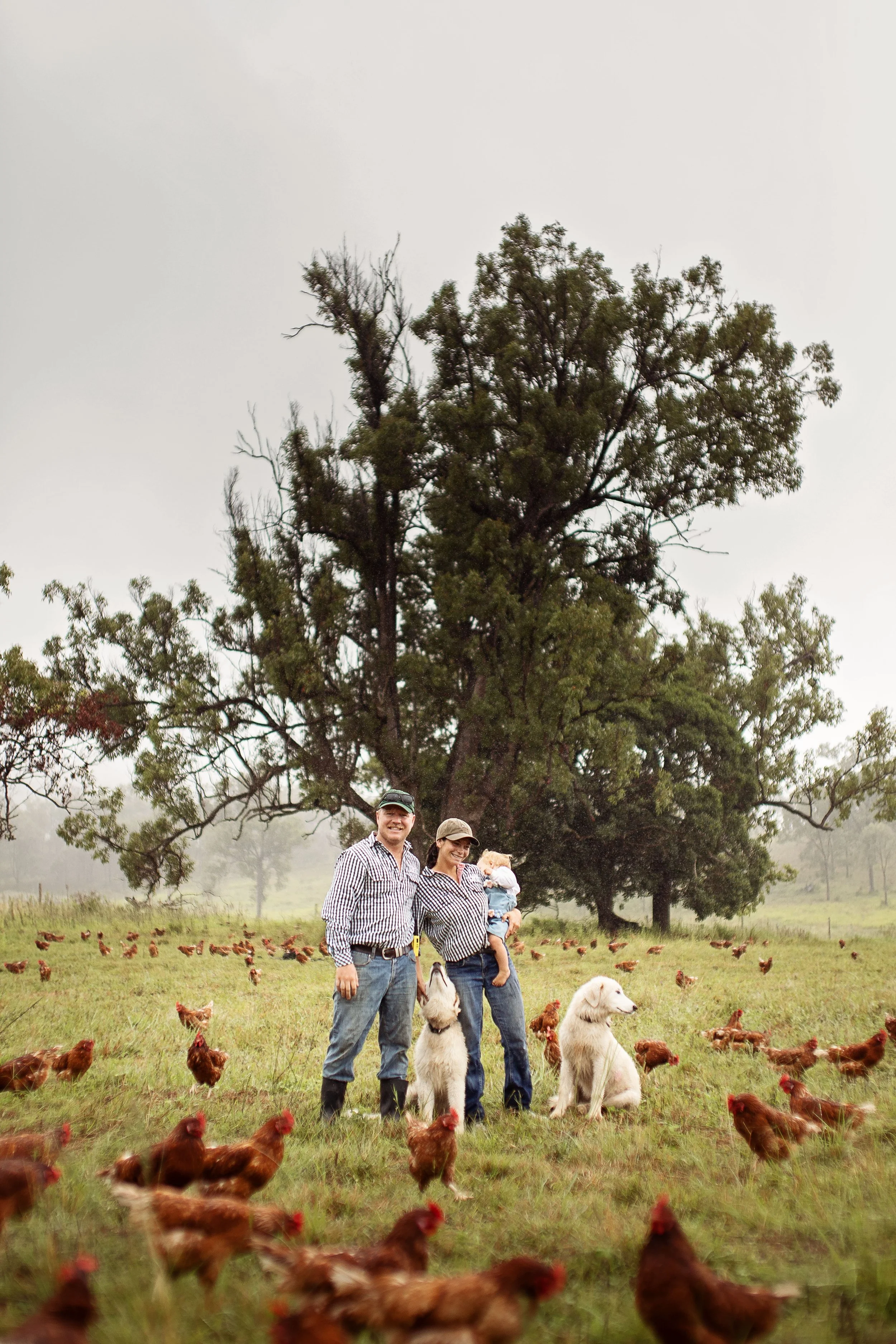
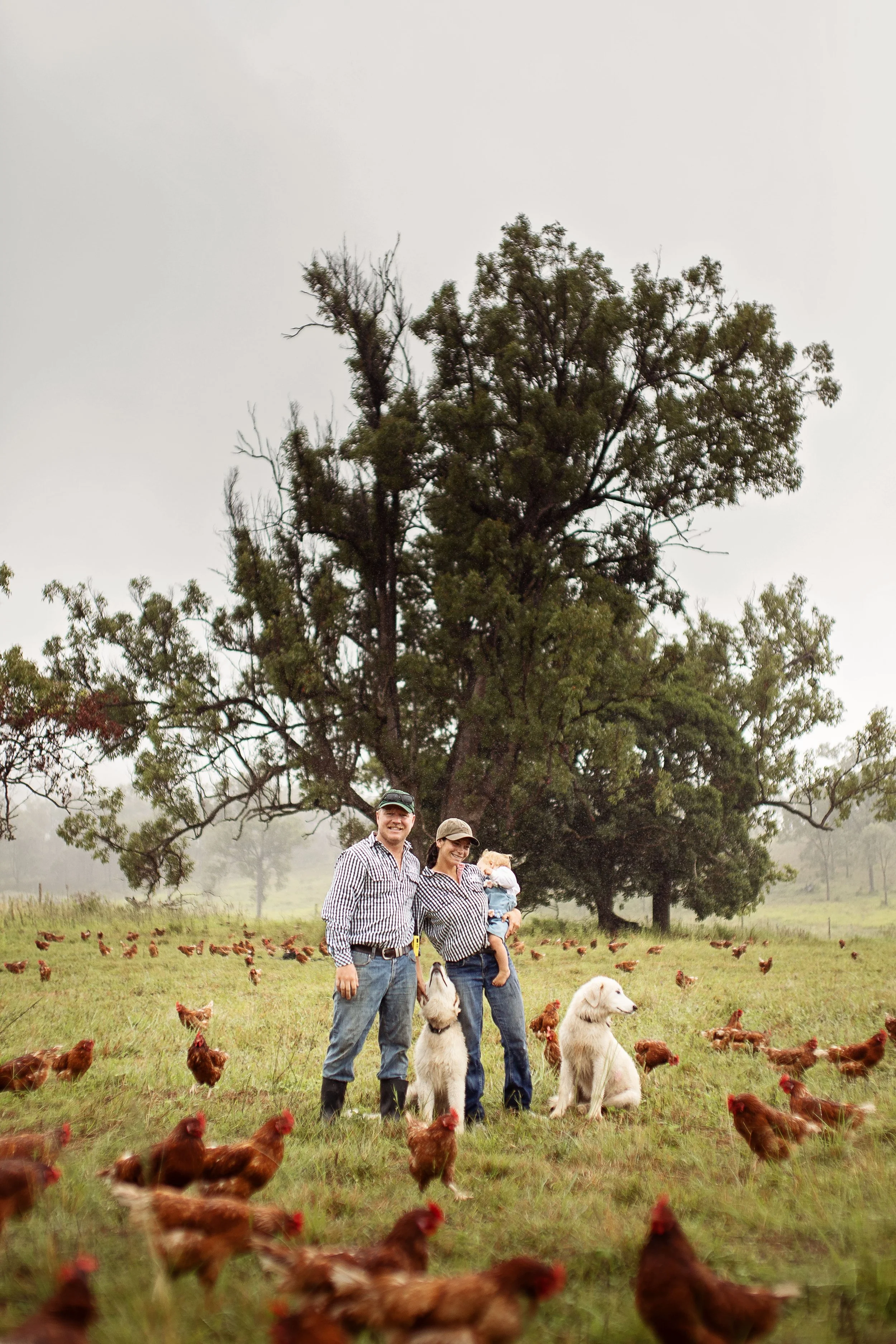
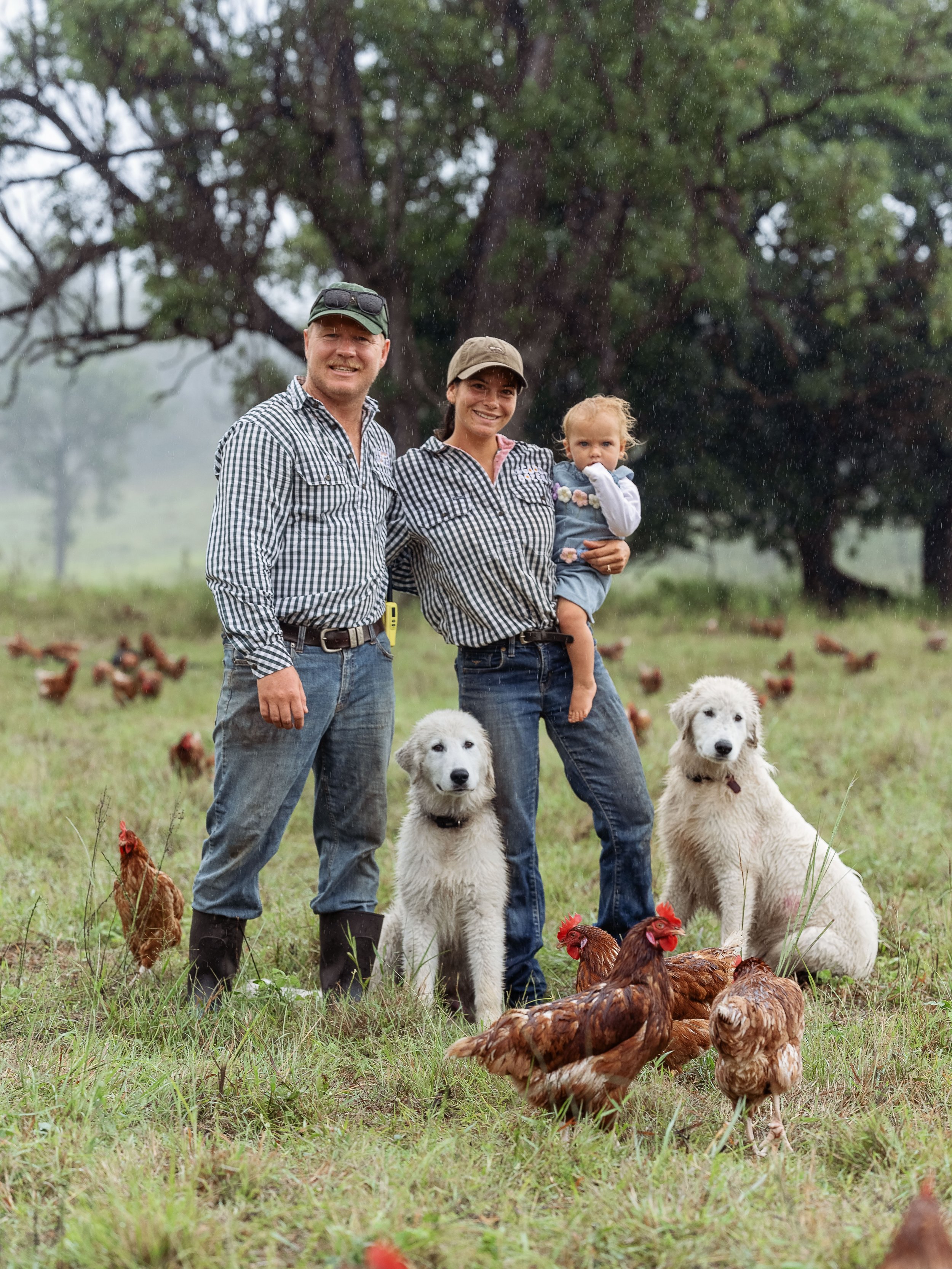
On a rolling patch of pasture outside Crows Nest, Brooke and Trent are quietly building a first-generation farm centred around pasture-raised chickens and regenerative principles. It’s all guided by a simple belief: that good food begins with good land.
Written by Sam Kirby.
Photography: Oh_Tilly Brand Photography
Tell us a little about yourselves.
We’re a first-generation farm just outside Crows Nest. Brooke grew up in Gayndah, where her father managed a citrus farm, and she’s now a teacher. Trent grew up on the Mornington Peninsula and had a family property near Bonnie Doon. He’s been a paramedic in Queensland for more than a decade.
We met the old-fashioned way - at the pub in Bargara. Work took us around Queensland for a few years, including time up in the Gulf of Carpentaria, but eventually the dream of owning our own farm became too strong to ignore. We started looking around the Bundaberg area before accidentally stumbling across a property near Crows Nest. We inspected it and put in an offer the next day.
Can you tell us what sparked The Good Dozen?
Both of us were still working full-time in our other jobs, but with a baby on the way, we started thinking about how to build something meaningful on the land so that we could spend more time together as a family.
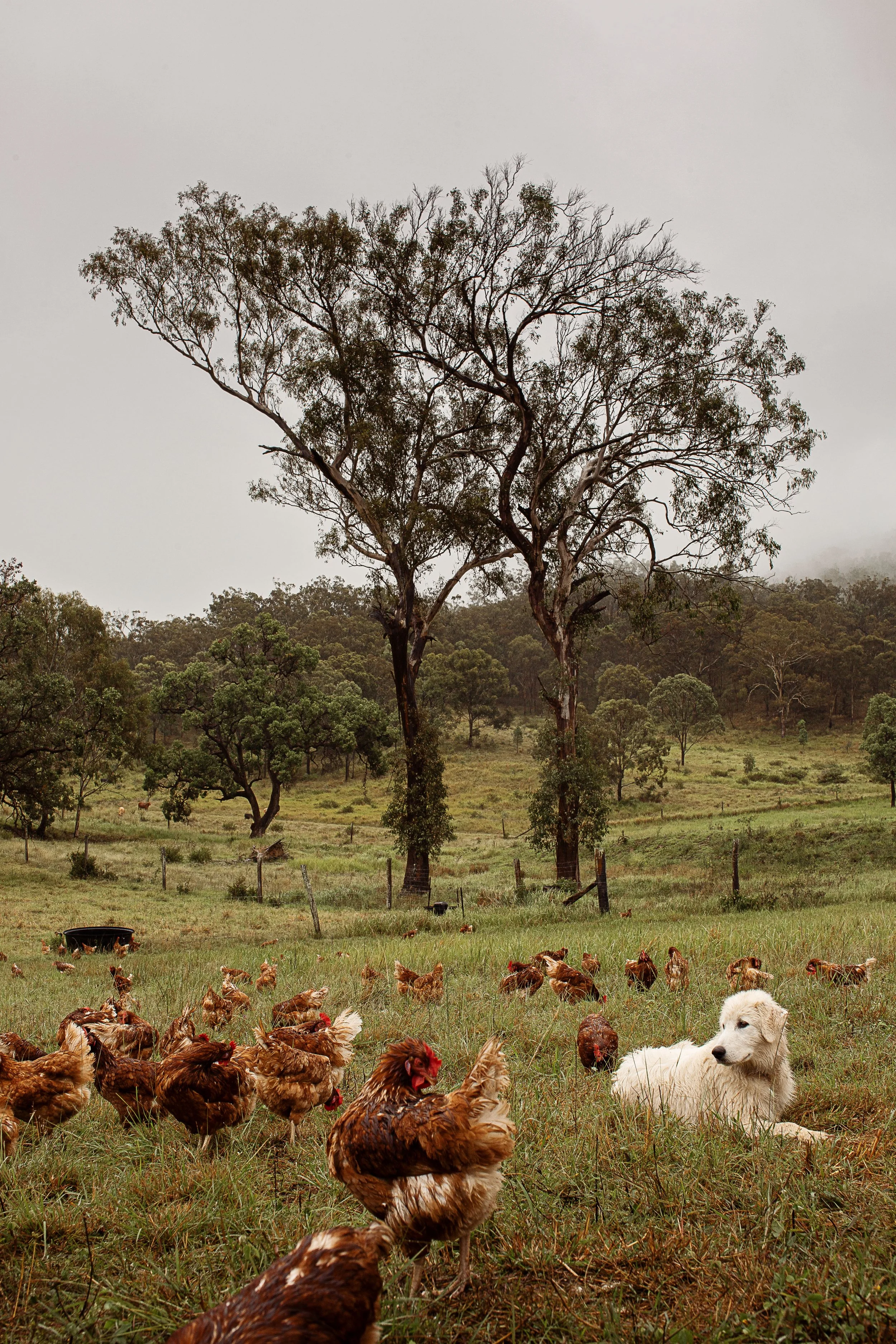
After five years running cattle, sheep and goats, we figured... why not add 1,000 chickens to the mix - all working together through rotational grazing.
From the beginning, we wanted the farm to follow regenerative and permaculture principles. We wanted to do more with less - which is actually a core permaculture idea: the problem is the solution.
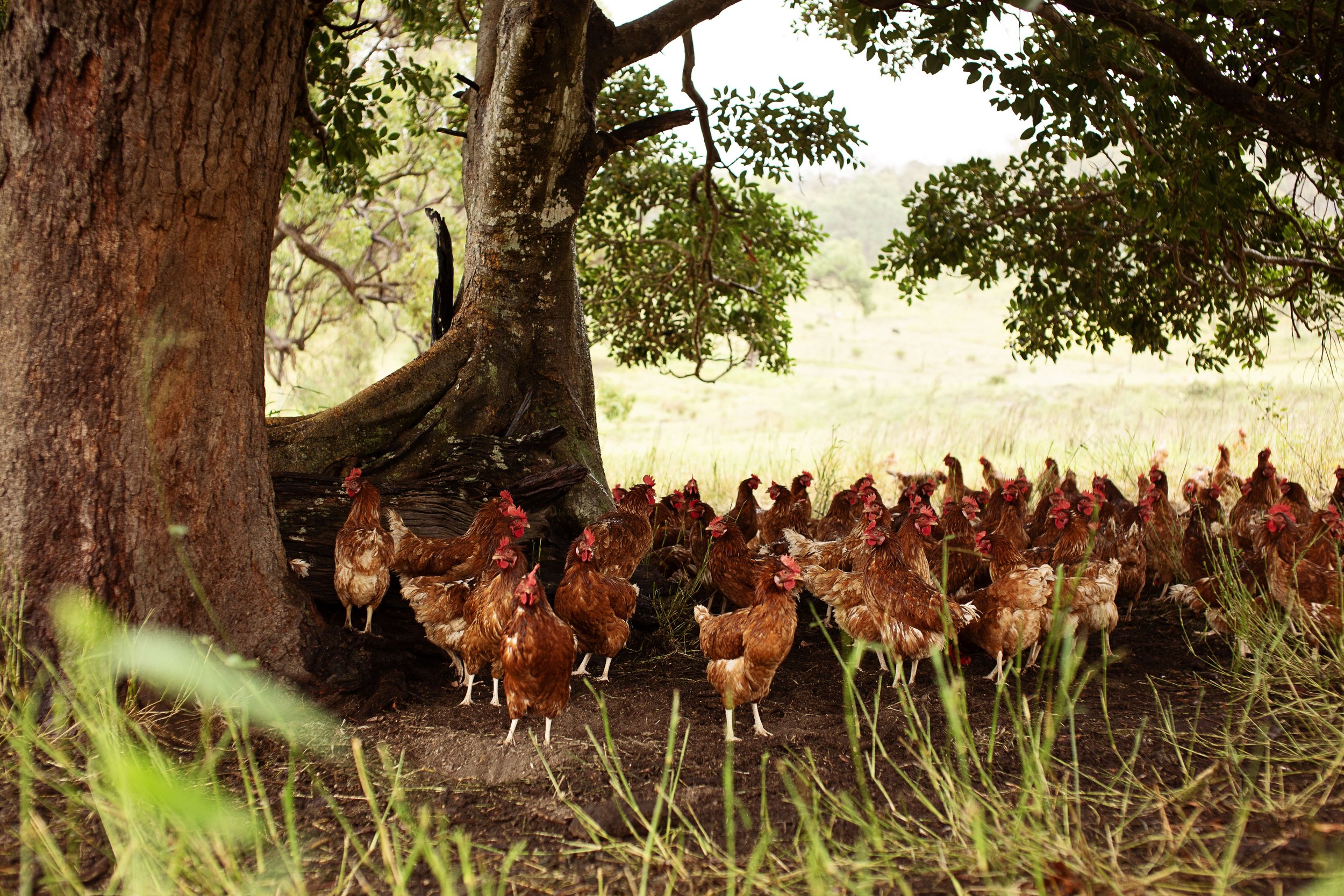
The chickens were actually perfect for that - they’re incredibly useful to the land. They turn insects, seed heads and scraps into rich fertiliser. Even their dust baths create little craters that help capture rainwater and recharge the soil.
The chickens gave us a way to grow the farm while staying true to the lifestyle we wanted - one where our daughter could grow up close to the land.
We have another flock arriving around Easter.
Did you already have a love for chickens?
Chickens are social animals and surprisingly mischievous.
We already had around fifty birds at the time up near the house, our 'backyard flock'.
We love chickens. We didn’t even own a TV for about five years. Most afternoons we’d sit outside and just watch them socialise, climb and wander around.
Add a glass of wine, and it’s actually incredibly relaxing.
We hear a lot about free-range, but what is pasture-raised?
Even with 'free-range' labelled eggs, it's surprising what that means and how few chickens actually leave the coop/shed and for how long, even if they are 'able to'.
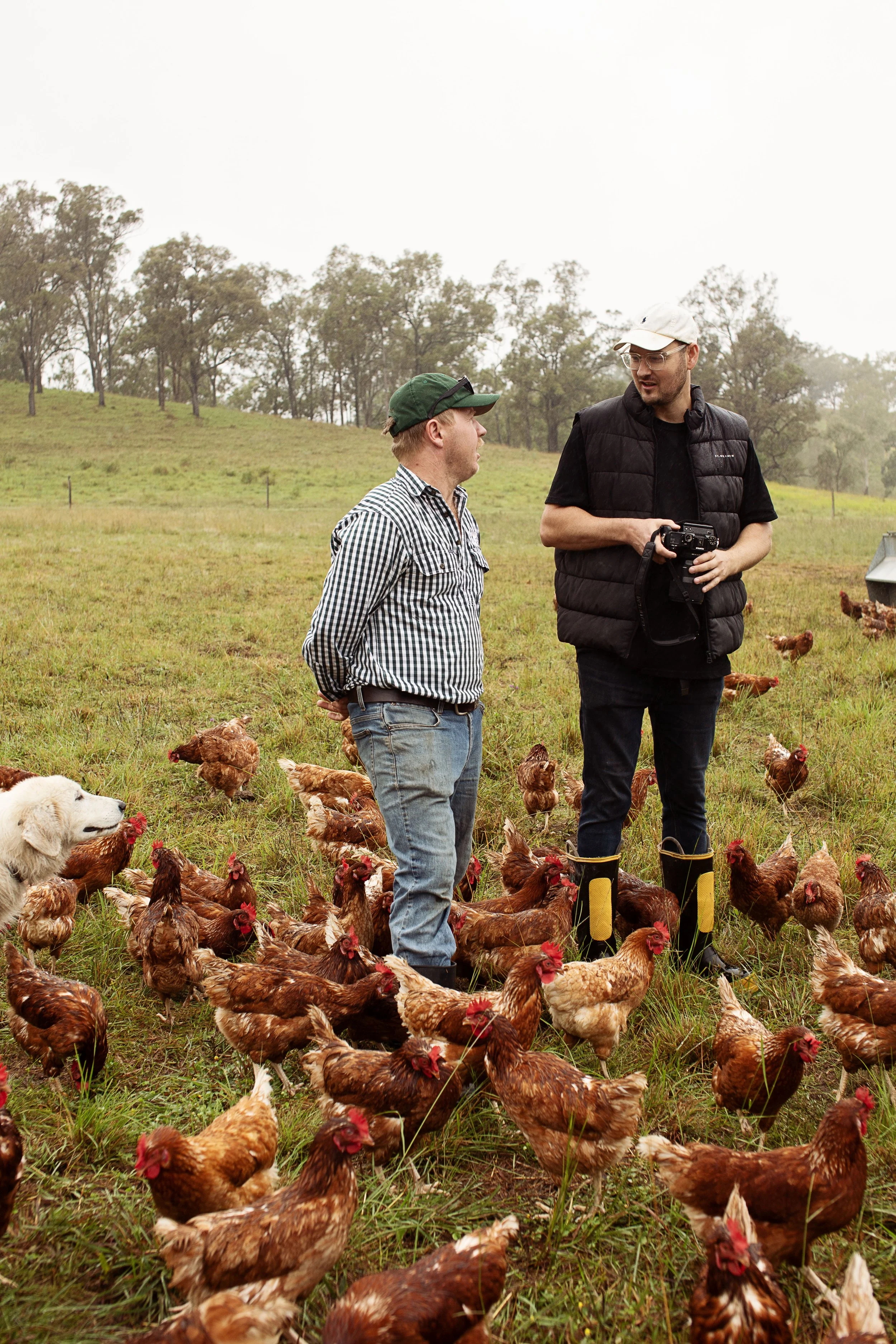
Pasture-raised hens are exactly that, spending their days out in the fields. They are undoubtedly the happiest birds,
But being in a natural environment means egg production fluctuates with the seasons and weather.
As first-generation farmers, what did that learning curve look like?
Steep. Very steep. Farming is a 24-hour business - you’re the labour, sales team, transport, payroll and manager all at once. We’ve been incredibly lucky to have support from family, friends and the Crows Nest community along the way.
Education has been a big part of it too. We read constantly and have been heavily influenced by people like Allan Savory, Joel Salatin, Bill Mollison and David Holmgren, who focus on working with the landscape rather than against it.
What does a typical day look like?
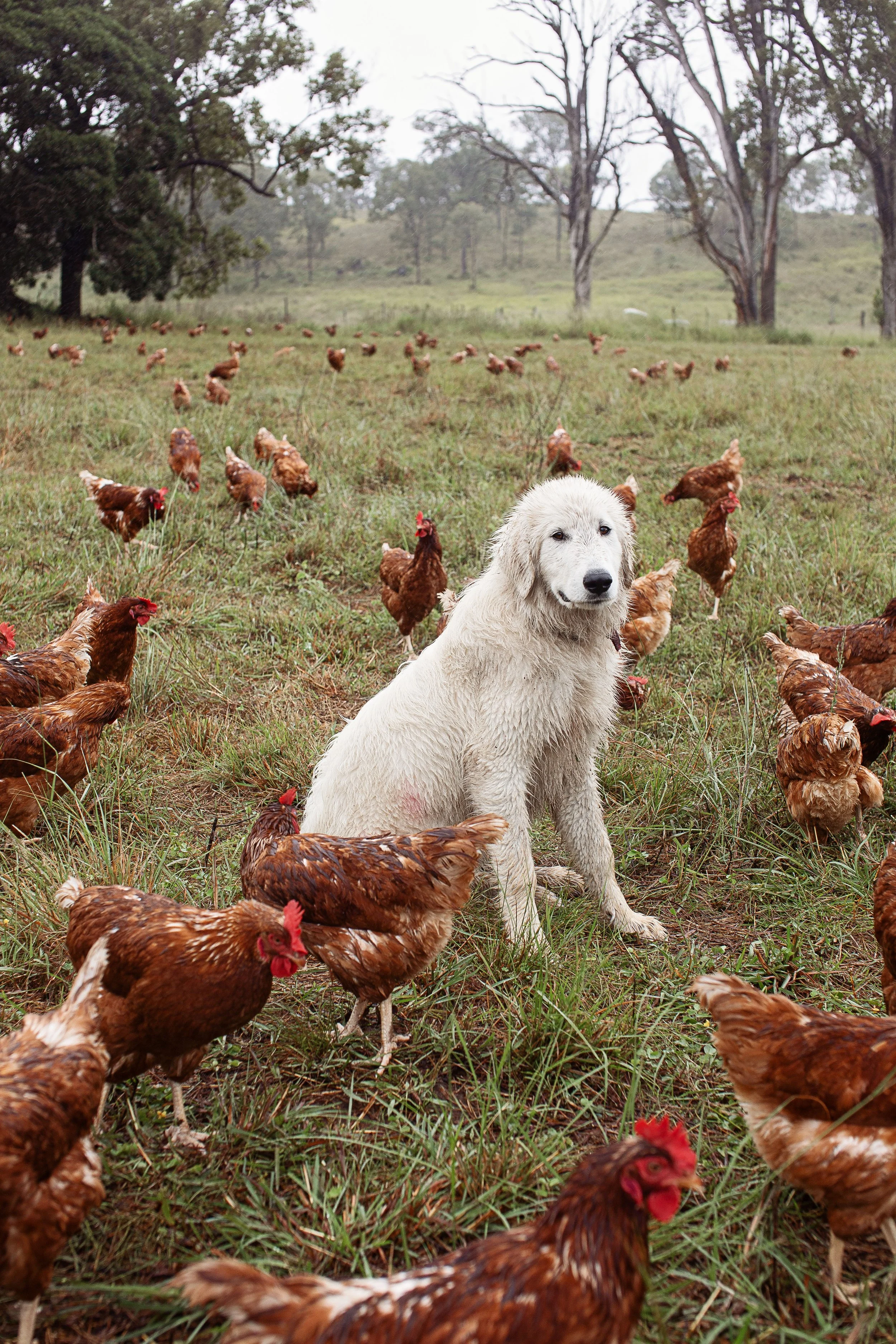
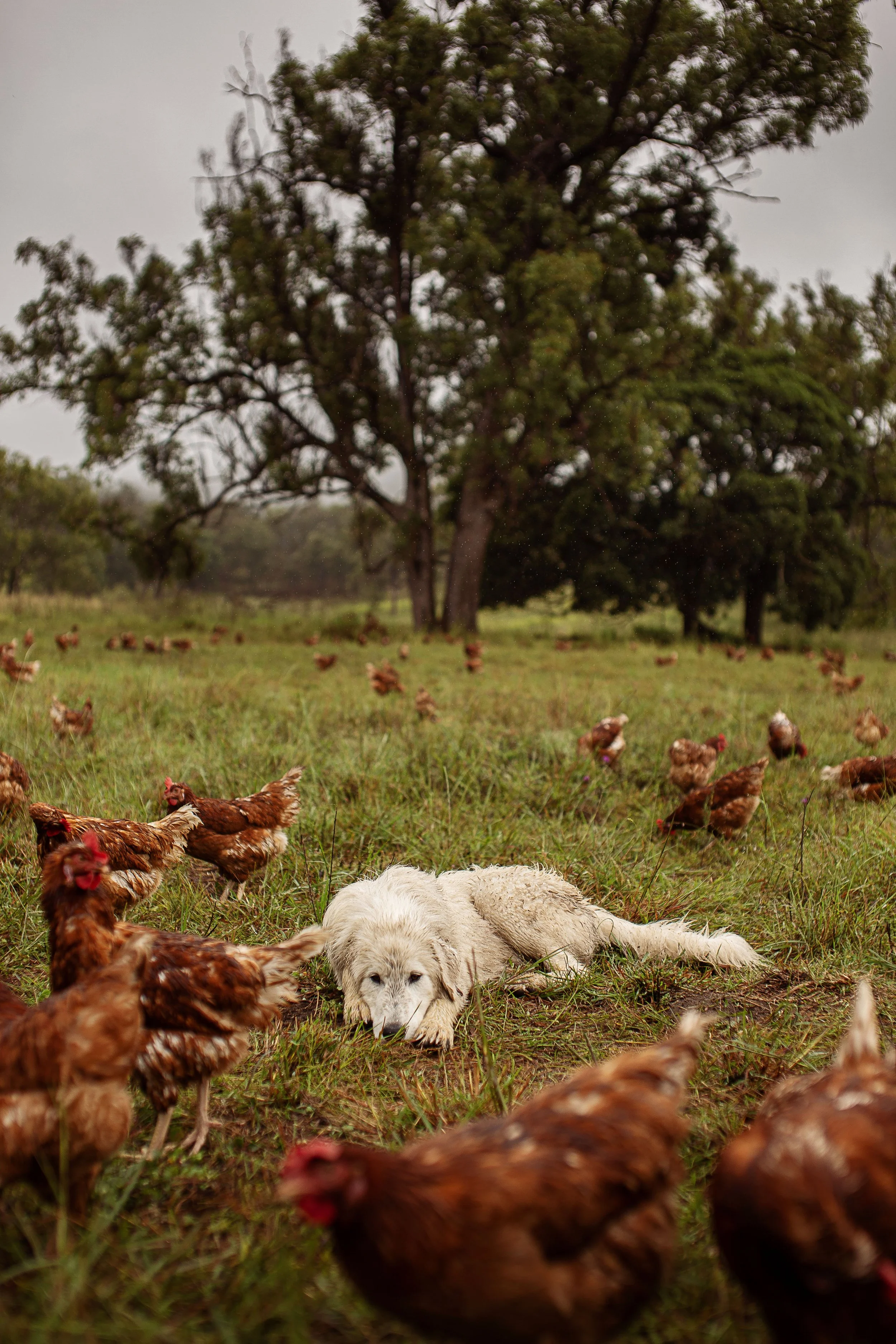
Days usually start with the sun. We head down to the chickens - normally with a strong coffee in hand - feed the birds and our guardian dogs, two Maremmas, Mario and Luigi, check the feed and water levels, and keep an eye on the flock.
At least once a week, the chicken trailers (where they sleep overnight) are moved across fresh pasture.
Then we collect the eggs and begin processing them - candling, inspecting, grading and packing before they head into the cold room.
What’s something people might not realise about eggs?
Eggshell colour doesn’t affect the quality or nutrition of the egg at all. Brown, cream, speckled - it’s just nature’s paintwork. Even two hens of the same breed can lay slightly different shades. What really matters is the hen’s health, diet and environment.
Where does your motto “The Taste of Doing Good” come from?
For us, it all comes back to a couple of things. Farming, when done thoughtfully, is really about stewardship - caring for animals, land and community.
We don’t see the joy in farming if the animals are miserable. Pasture-raising is actually quite labour-intensive, but we believe it’s the most ethical way for a hen to live.
With the land, the soil is a living system, and when you nurture that system, everything improves - the plants, the animals and ultimately the food.
And finally, the people. The quality of the food we and many others produce is a direct reflection of how we care for all three. Why wouldn’t we try to give people the most nutritious, flavourful food possible?
People are definitely valuing local, ethical produce more now - and they can taste the difference.
@the_good_dozen
Do you have a campaign we should know about? Please let us know!